

Caryn Yap had just 48 hours to experience Seoul’s world-famous beauty scene. Here’s how she spent them – and what she discovered along the way.
I’ve been noticing a pattern lately. Friends fly to Seoul for a few days and come back looking like a better version of themselves.
Curiosity eventually got the better of me, so when my husband had a two day work trip to Seoul, I decided to tag along and see what could be done in 48 hours. The only problem was that I had no idea where to begin.
Finding the right clinic
Seoul’s beauty scene is famously advanced, but it can also be overwhelming. There are big name clinics, local doctors with cult followings, unfamiliar treatment names and an entire ecosystem of technologies promising lifting, tightening, brightening and regeneration. For someone flying in with limited time, limited Korean and a low pain threshold, choosing blindly felt like a terrible idea.
As with any cosmetic procedure, treatments vary in suitability and outcomes, so I was keen to understand what might be appropriate for me rather than simply booking the most popular option. So I put a call out on Instagram. One reply led me to Jiwon, one of the Korean beauty insiders behind K DOC, a beauty concierge service that helps international clients navigate Seoul’s clinic landscape. Within hours of receiving photos of my face, she had consulted several clinic specialists and come back with a plan.
That, I quickly realised, is where Seoul operates differently. It is not simply about choosing treatments from a menu at a famous clinic. It is about matching your face, concerns, pain tolerance and schedule with the right specialist and the right technology.
While many visitors go straight for Ultherapy or Thermage for tightening and lifting, Jiwon felt they were not the best fit for me because of my low pain tolerance. Thermage is a radiofrequency treatment, while Ultherapy uses ultrasound. Xerf sits in the same skin-tightening conversation, but works differently. It is a newer dual-frequency monopolar radiofrequency treatment from Korea that delivers heat at different depths. According to the manufacturer, the treatment is designed to target skin firmness and facial contour over time.
Trying Xerf
Her recommendation was Xerf, followed by a skin regenerative treatment. With only two nights in Seoul and my flight arriving the next day, the timing was tight. The better-known clinics were already booked out weeks in advance, so Jiwon looked further afield and secured an appointment with a specialist at a local clinic known for performing Xerf at high volume. It was not somewhere I would have found on my own. In Seoul, the best option is not always the most obvious one, especially if you’re looking for a specific specialist, device or a last-minute appointment. She also arranged transport and a translator, which turned out to be essential.
The next morning, K DOC drove me around 30 minutes out of Gangnam to La Mar. They do not advertise in English, but Jiwon chose it because it is well known locally. Xerf is often described as one of Korea’s next-generation tightening treatments. Unlike older radiofrequency devices that rely on a single frequency, Xerf uses two frequencies, to heat different layers of tissue. In simple terms, the idea is to target both surface tightening and deeper structural support, while making the experience more tolerable than some of the more established lifting treatments.
My translator explained to the specialist, who spoke English pretty well and was able to communicate with me, that I wanted to focus on tightening, especially around the jawline. He mapped out my face and worked across it methodically. I had been nervous about the pain, but it was much more manageable than I expected. It felt a bit hot at times, especially around more sensitive areas, but it was not painful. Within about 30 minutes, it was done.
According to the specialist, the full results develop gradually over the following weeks, although I felt my jawline looked subtly more defined immediately afterwards.
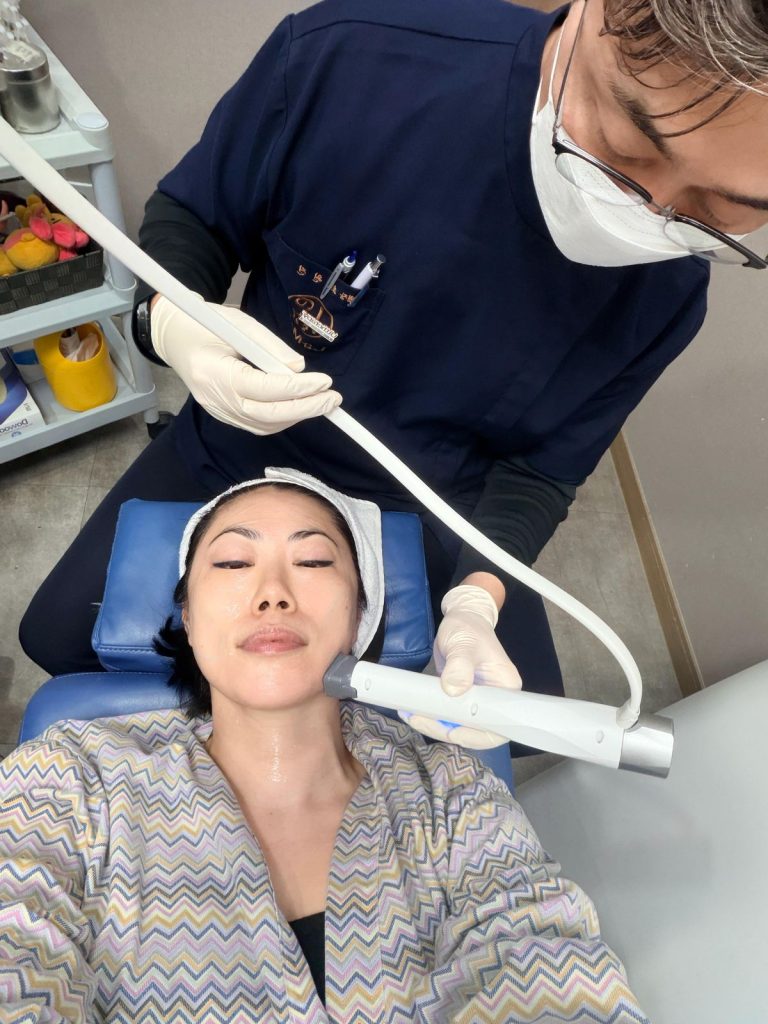
After Xerf, I had a Ginoxell treatment, described as a regenerative facial intended to soothe the skin and support recovery following radiofrequency treatment.
From there, K DOC took me to Geunal Plastic Surgery for a skin treatment using CureJet, a needle-free delivery device. The clinic explained that, unlike a traditional facial, it is intended to deliver active ingredients beneath the skin’s surface. I won’t pretend it was comfortable, and there is real downtime involved. After the treatment, my face was covered in small red marks across my forehead and cheeks. By the next day, the bruising had arrived properly, starting dark before fading to yellow over about a week. If you are considering it, make sure you factor some recovery time into your trip.
Once the bruising settled, I felt my skin looked fresher and more even in tone. It wasn’t the glossy effect of a traditional facial, but something that looked natural to me. A few weeks later, my husband even commented that my skin looked as though it was glowing from the inside, which made the downtime feel more worthwhile.
A K-beauty consultation worth booking
After the treatments, I stopped by Olive Young Apgujeong to stock up on K beauty essentials, but ended up staying longer than planned. This outlet offers a skin analysis and consultation service, which I found extremely useful.
They assessed both my husband’s and my skin, then made recommendations based on the results rather than simply pushing the latest trending products. They also went through the products we were already using and pointed out what was worth keeping and what was not. It made me realise I had been overdoing it, especially after having treatments that required proper recovery rather than more active ingredients.
This was a really smart stop. Instead of buying blindly, you can leave with a recovery routine that actually suits your skin condition at that moment.
Seoul’s luxury head spa
To finish the trip, I went to Christian UNV Head Spa in Hannam-dong. Head spas have become increasingly popular in Seoul, not just for hair, but as a way to unwind and enjoy a moment of relaxation.
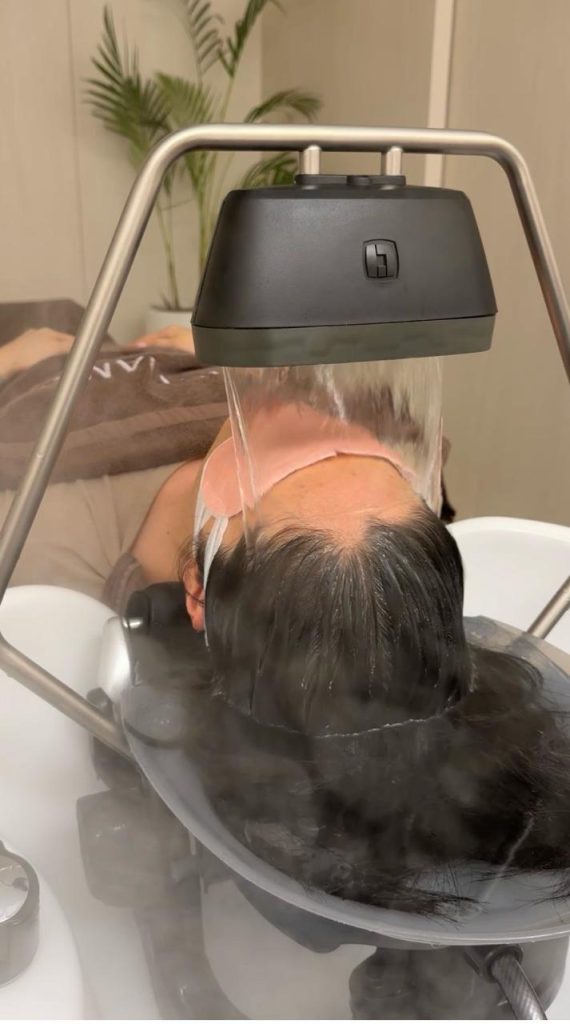
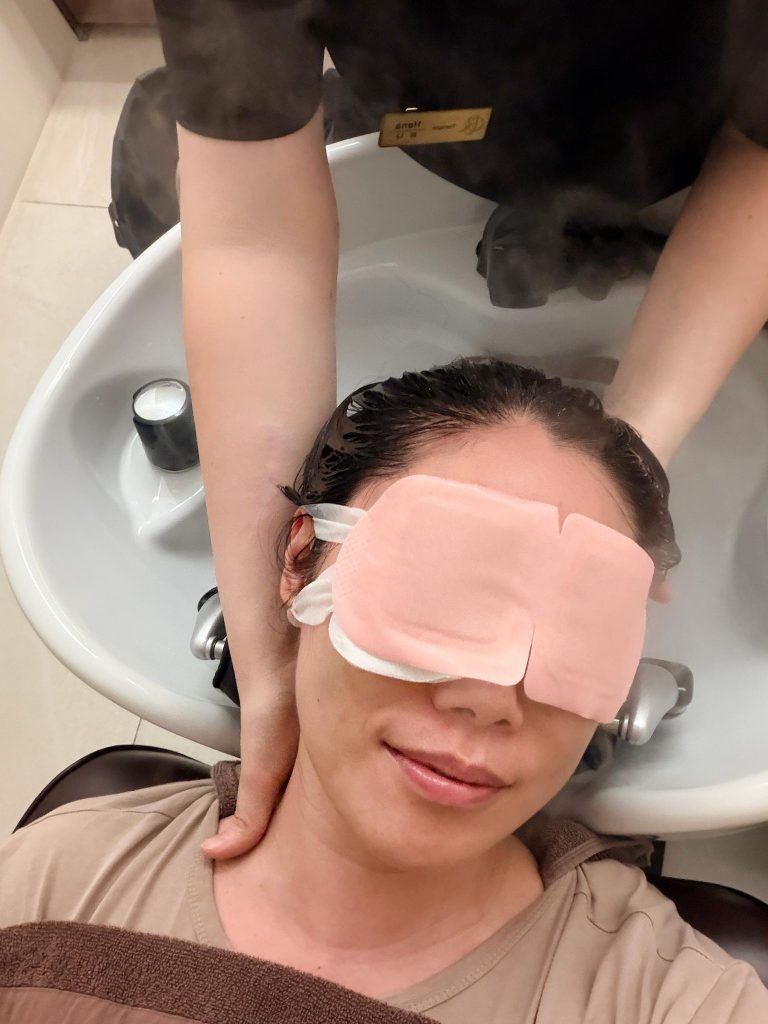
Christian UNV sits on the more elevated end of the market and is known for its calm, minimalist setting and personalised treatments. It offers a structured, treatment-led approach based on the condition of your scalp. After a scalp analysis, the experience starts with a cooling product applied to the scalp, followed by a deep cleanse to remove buildup and a massage through the scalp and neck to stimulate circulation.
One of the most memorable parts is the water therapy. A steady stream of water runs across your forehead while the therapist works through your scalp, creating a strange but deeply relaxing sensation. There are temperature changes and aromatherapy throughout, which make it feel more like a full nervous system reset than a hair treatment.
By the end, everything felt lighter, calmer and more balanced. It was exactly the kind of treatment I needed before getting on a plane.
Was it worth flying to Seoul?
Yes, but not because I came home looking dramatically different. In my opinion, the best Seoul beauty treatments are about looking fresher, brighter and better rested in a way that people notice without being able to pinpoint exactly what changed.
For me, Xerf was the standout treatment, I felt that it gave me the kind of subtle tightening I wanted around the jawline without the pain I had been worried about.
What surprised me most was how much the planning mattered. Seoul has no shortage of clinics and treatments, but that does not mean every option is right for every face. Without K DOC, I would probably have booked the most obvious clinic, chosen the most talked about treatment and hoped for the best. Instead, I ended up with a plan that took into account my face, schedule, pain threshold and desired outcomes.
K DOC also put together a small recovery kit with tailored products, which made the next few days much easier. It was a small detail, but it reinforced the biggest lesson of the trip: the treatment is only one part of the process. The specialist, delivery method, order of treatments, aftercare and downtime all matter.
Would I fly to Seoul again for beauty treatments? Absolutely. But next time, I would stay longer, build in proper downtime and treat recovery as part of the trip. Forty-eight hours is enough to get a surprising amount done in Seoul, but the real results, if any, take longer to become apparent.
For more information about K DOC’s concierge service, visit K DOC or download the K DOC app.
Disclaimer: This feature is based on the author’s personal experience. The treatments and itinerary were arranged with the assistance of K DOC. All opinions are the author’s own. Cosmetic procedures are not suitable for everyone, and results vary between individuals. This article is not intended as medical advice. Readers should seek independent advice from a suitably qualified healthcare professional before deciding whether any aesthetic procedure is appropriate for them. The inclusion of specific clinics or treatments does not constitute an endorsement by Hong Kong Living.
Lead image is Greta Hoffman via Pexels.


